

How to Learn Spanish Fast: Evidence-Based Strategies That Actually Work
Learning Spanish doesn’t have to take years. With the right approach, you can achieve conversational fluency much faster than traditional methods suggest. The key to how to learn Spanish fast isn’t working harder, it’s working smarter by focusing on high-impact strategies backed by language acquisition research.
Table of Contents
Understanding Realistic Timelines
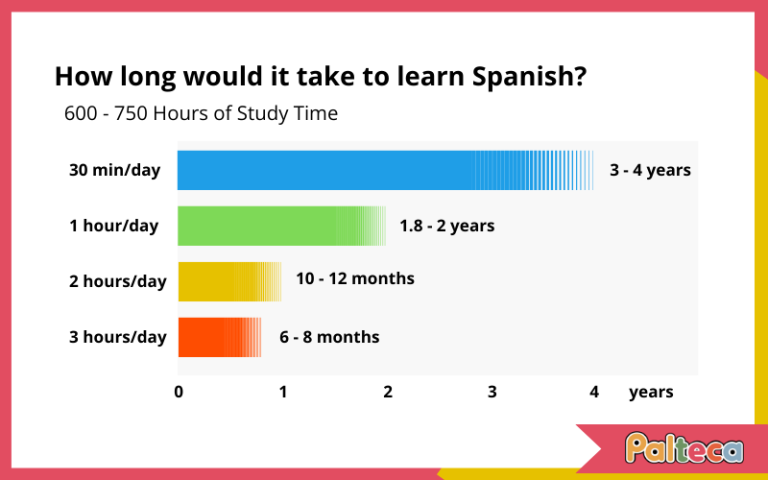
Before diving into techniques, let’s set realistic expectations on how long would it take to learn Spanish. The Foreign Service Institute estimates that Spanish requires approximately 600-750 classroom hours for English speakers to reach professional proficiency. However, this timeline assumes traditional classroom learning. With optimized methods and consistent daily practice, you can achieve conversational fluency in 6-12 months.
The good news? You don’t need perfect grammar or a 20,000-word vocabulary to communicate effectively. Research shows that the most common 1,000 words in Spanish cover about 80% of everyday conversation, a principle we’ll return to shortly.
Apply the 80/20 Principle to Your Learning
The Pareto Principle, or 80/20 rule, is particularly powerful for language learning. Instead of trying to master everything at once, focus on the 20% of Spanish that you’ll use 80% of the time.
Start with high-frequency words and phrases. The 1,000 most common Spanish words will carry you through most conversations, while the top 3,000 words cover roughly 95% of written and spoken Spanish. Prioritize verbs like ser, estar, tener, and hacer, along with essential question words and conversational connectors.
Focus on present tense first. While Spanish has numerous verb tenses, you can communicate effectively using primarily the present tense in your first few months. Native speakers will understand you perfectly well if you say “mañana yo ir a Madrid” before you’ve mastered the future tense.
How to Learn Spanish Fast with Comprehensible Input
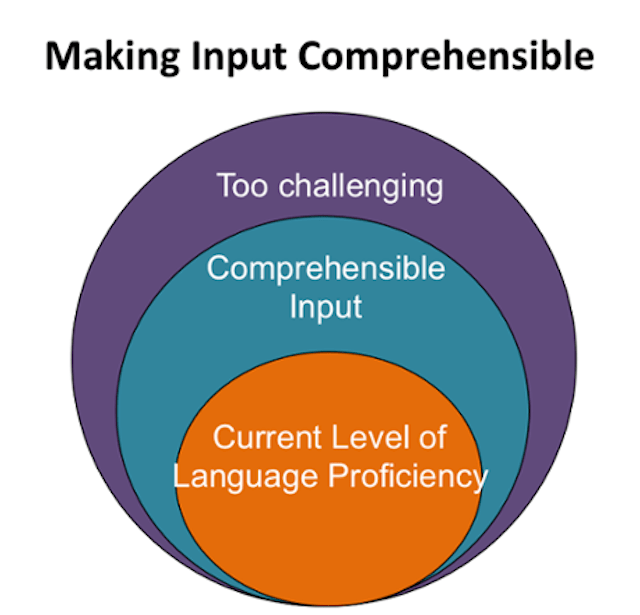
One of the most effective acceleration techniques is using Spanish comprehensible input, exposing yourself to Spanish content that’s just slightly above your current level. This method, developed by linguist Stephen Krashen, allows your brain to naturally acquire language patterns without explicit grammar study.
Start with content designed for learners, then gradually transition to native materials. Apps like Palteca, Spanish podcasts for beginners, YouTube channels with Spanish subtitles, and graded readers provide structured input that matches your level. As you progress, switch to Spanish Netflix shows, podcasts on topics you already know well, and news articles about familiar subjects.
The key is volume and consistency. Thirty minutes of daily comprehensible input beats three hours of cramming on weekends. Your brain needs regular exposure to recognize patterns and internalize structures naturally.
Stop Translating in Your Head
Mental translation is one of the biggest obstacles to fluency and speed. When you constantly translate from English to Spanish, you create an unnecessary extra step that slows down both comprehension and speaking.
To break this habit, practice thinking in Spanish directly. Start small, narrate simple actions as you do them. “Abro la puerta. Camino a la cocina. Preparo café.” Label objects in your environment with Spanish sticky notes. When you see “refrigerador” every time you grab milk, your brain starts associating the word directly with the object, bypassing English entirely.
This direct association is how children learn languages, and it’s significantly faster than translation-based methods. It might feel awkward initially, but within weeks you’ll notice thoughts beginning to form in Spanish spontaneously. Check out our article, How to Think in Spanish: Stop Translating In your Head, if you’d like to learn more about why relying on translations is slowing your progress, and what strategies you can use to start thinking in Spanish.
Prioritize Speaking from Day One
Many learners wait until they “feel ready” to speak. This perfectionist approach actually slows your progress. Speaking, even badly, is the fastest way to identify gaps in your knowledge and build the neural pathways for production.
Attend Spanish language exchanges in your area or find a Spanish speaking partner on apps like Tandem. Even 15-minute daily conversations will accelerate your progress more than hours of passive study. Focus on communication over correctness. Native speakers care more about understanding you than hearing perfect grammar.
Record yourself speaking Spanish about familiar topics. Listen back to identify pronunciation issues and areas where you hesitate. This self-feedback loop helps you improve without relying solely on external correction.
Voice recognition apps can provide valuable real-time feedback on your pronunciation. Tools like Palteca allow you to practice speaking through mimicry, helping you nail the sounds and rhythms of specific words and phrases. For longer conversational practice, apps like Jumpspeak offer AI conversation partners that let you work through complete dialogues. These technologies are particularly useful for tackling tricky pronunciation patterns and building confidence before speaking with an actual person.
Use Spaced Repetition for Vocabulary
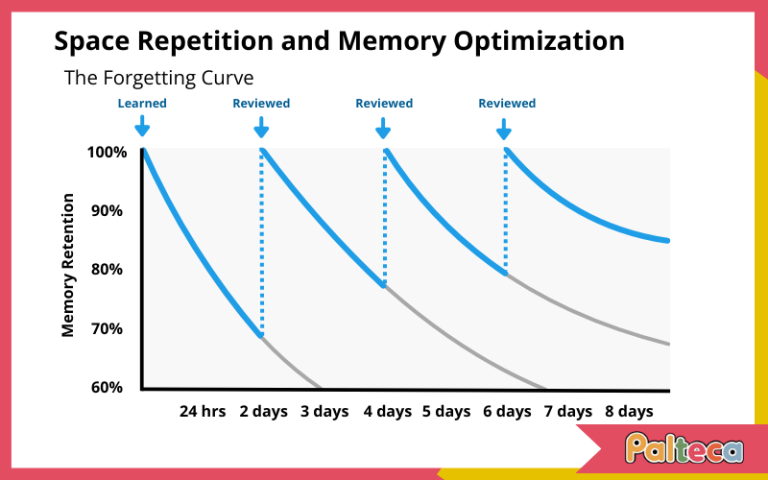
Spaced repetition systems (SRS) like Palteca and Anki are scientifically proven to optimize memorization. Instead of reviewing vocabulary randomly, SRS algorithms present words just before you’re likely to forget them, maximizing retention while minimizing time investment.
Create custom decks focused on vocabulary you encounter in real contexts rather than pre-made lists. When you learn a word from a conversation, podcast, or article, add it to your deck with the full sentence for context. This contextual learning is far more effective than memorizing isolated words. Avoid the temptation to use direct translations in your flashcards, instead use images, sentences, or descriptions. This will help you learn new words without having to translate in your head constantly.
Aim for 10-20 new cards daily, a sustainable pace that builds a substantial vocabulary within months without overwhelming your review load.
Immerse Yourself Digitally to Learn Spanish Fast
You don’t need to move to Spain or Mexico to create an immersive environment. Change your phone, computer, and social media to Spanish. Follow Spanish-language accounts on Instagram and Twitter. Join Spanish-speaking Reddit communities or Facebook groups about topics you’re interested in, whether that’s technology, fitness, or travel. Use Spanish Immersion apps like Palteca and Rosetta Stone to learn from watching native Spanish speakers in real situations.
This passive immersion adds hundreds of micro-exposures to Spanish throughout your day without requiring additional study time. Reading a Spanish meme, understanding a Spanish tech tweet, or navigating your phone in Spanish all contribute to pattern recognition and vocabulary acquisition.
Study Smart, Not Long
Quality beats quantity when it comes to study sessions. Research on learning retention shows that distributed practice, shorter sessions spread throughout the day, is more effective than marathon study blocks.
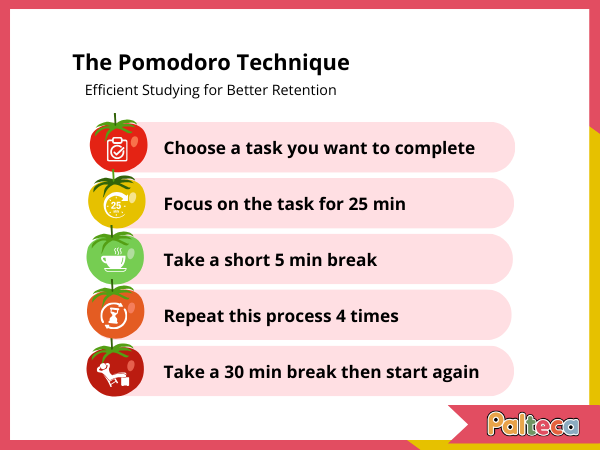
Try the Pomodoro Technique with 25-minute focused sessions followed by short breaks. Three 25-minute sessions throughout the day (morning, lunch, evening) will yield better results than a single 90-minute cramming session. During these sessions, eliminate distractions completely. Your brain learns more efficiently when fully engaged.
Track Progress to Stay Motivated
Efficiency-minded learners benefit from measurable progress. Keep a simple log of metrics like: new words learned this week, minutes of listening practice completed, number of conversations held, or comprehension percentage when watching Spanish content.
Seeing tangible progress provides motivation and helps you identify which methods work best for you. If your listening comprehension improves dramatically after two weeks of daily podcasts but vocabulary retention is plateauing, you know where to adjust your approach.
The Reality Check: Consistency Over Intensity
Here’s the truth that might save you months of frustration: consistency matters more than intensity. Studying Spanish for 30 minutes every single day will get you further than studying 3.5 hours every weekend. Your brain needs regular exposure to build and maintain neural pathways for language processing.
Building a sustainable daily habit is the single most important factor in learning Spanish fast. Find a time that works with your schedule and protect it. Whether that’s during your morning coffee, lunch break, or evening wind-down, make it non-negotiable. Find a friend or Spanish learning partner that will help keep you accountable, or use apps like Palteca, Duolingo, or Busuu that will remind you daily to study.
Start Learning Spanish Today
Learning Spanish quickly is absolutely achievable with focused, strategic practice. By concentrating on high-frequency vocabulary, embracing comprehensible input, speaking from day one, and maintaining daily consistency, you can reach conversational fluency faster than you might think.
Ready to put these strategies into action? Palteca offers a structured approach to Spanish learning that incorporates these evidence-based methods, helping you make efficient progress without wasting time on outdated techniques. The best time to start was yesterday. The second best time is today!
Your future Spanish-speaking self will thank you for beginning now.